Sunday, 16 December 2012

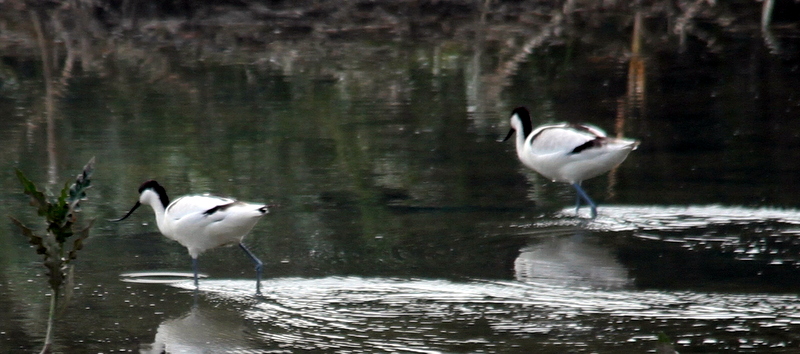
Pied Avocet at Ha Pak Nai, Hong Kong on 15 December 2012

A pair of Pied Avocets (Recurvirostra avosetta) foraging at the mouth of the Pak Nai Watercourse (CH00 + 000) at Ha Pak Nai, Hong Kong on 15 December 2012. These birds are winter visitors to Hong Kong.


Sunday, 25 November 2012

Turritella. Chep Lap Kok and Hei Ling Chau, Hong Kong. 10 October 2012.

These are photographs of Turritella bacillum trawled from the seabed off Chep Lap Kok and Hei Ling Chau, Hong Kong on 10 October 2012:


Chep Lap Kok, Hong Kong


Hei Ling Chau, Hong Kong


Thursday, 6 September 2012

Plastic Nurdle spill – Nurdles still in the environment

During Typhoon Vicente which hit Hong Kong on 23 July 2012 a container ship near Hong Kong lost 7 x 40 foot containers. Six of these containers were each loaded with 1000 x 25 kilogram bags of Plastic Nurdles (pre-production Plastic Pellets). Five of these containers have since been located. All of them had lost some or most of their contents.

These bags and loose Nurdles started washing up on Hong Kong beaches soon afterwards. The majority of Nurdles which washed up on our shores were recovered during a massive volunteer cleanup operation which was initiated immediately after the spill.

Because Typhoon Vicente occurred during a high tide accompanied by a mini storm surge, many loose Nurdles were pushed high up into the rocky shores, coastal undergrowth and seawalls in Hong Kong.

These will slowly be flushed out of these locations by rainstorms, high tides and tropical storms and continue to wash up on our beaches in ever decreasing numbers for many months to come.

The following photographs were taken on 6 September 2012 to illustrate the problem.


Sea wall at Nim Shue Wan, Discovery Bay.


Nurdles trapped high in the sea wall at Nim Shue Wan.


Rocks on shoreline at Nim Shue Wan.


Nurdles trapped high in rocks on shoreline at Nim Shue Wan.


Rocks on shoreline at Sam Pak Wan, Discovery Bay.


Nurdles trapped in rocks on shoreline at Sam Pak Wan.


Rocky coastline at Sam Pak Wan.


Pockets of Nurdles at top of high tide line on rocky coastline at Sam Pak Wan.

Plastic Nurdle spill – Missing container

During Typhoon Vicente which hit Hong Kong on 23 July 2012 a container ship near Hong Kong lost 7 x 40 foot containers. Six of these containers were each loaded with 1000 x 25 kilogram bags of Plastic Nurdles (pre-production Plastic Pellets). Five of these containers have since been located, but one is still missing.

During Typhoon Kai Tak which hit Hong Kong on 16 August 2012, 80 full bags of Nurdles and many loose Nurdles washed up on beaches and shores from Mui Wo to Chi Ma Wan. See the photographs below of bags of Nurdles which washed ashore near Shap Long on Chi Ma Wan peninsula (Courtesy of Merrin Pearse at Coordinate4U). This suggests the missing container is possibly on the seabed in the vicinity of Hei Ling Chau. Searches have failed to find it.

If the container still contains part of its cargo, it is possible that full bags and loose Nurdles will leak from the container during future storm events, and these will wash up in the Mui Wo to Chi Ma Wan area. On the other hand, it could be empty by now, in which case there will be no future spills of bags or Nurdles. Irrespective of the containers status, the infrastructure is now in place to quickly and effectively respond to such a spill should it occur.


Bags of Nurdles washed ashore at Chi Ma Wan during Typhoon Kai Tak.

Tuesday, 21 August 2012

Plastic Nurdle spill – Understanding the science

To understand the science of plastic pellets, the following research papers at Algalita.org give an idea of some of the issues surrounding plastic pellets in the environment, particularly their impact on marine and bird life:


Also, watch the following YouTube video to see some of the concerns of, and actions taken by the US Government on plastic pellets:

Friday, 17 August 2012

Plastic Nurdle spill – FEHD plastic pellet collection points

On many beaches, FEHD have set up plastic pellet collection points. If you see one of these signs, can you please leave any bags with collected pellets, or other rubbish next to the sign. This will make it easier for FEHD to remove rubbish which has been collected during the cleanups. Please see the photographs below:


Tuesday, 14 August 2012

Plastic Nurdle spill - Hei Ling Chau, Hong Kong.

The following photographs show potential sites where Plastic Nurdles could have floated ashore on Hei Ling Chau, Hong Kong. This island has restricted access because of the Correctional Services facility which is on the island, so please do not go to this beach:

Saturday, 11 August 2012

Plastic Nurdle spill – Video of Peng Chau

The following video shows the main beaches on Peng Chau, (near Discovery Bay), all of which have varying degrees of Nurdles – please note, Tung Wan main beach is under a No-fly zone – it also has Nurdles:


Video of Peng Chau (near Discovery Bay)

Plastic Nurdle spill – Map of Peng Chau

The following map shows the main beaches on Peng Chau, (near Discovery Bay), all of which have varying degrees of Nurdles. Please note, the main beach on Peng Chau - Tung Wan is a no-fly zone - it also has Nurdles.


Map of Peng Chau showing the beach locations.


Friday, 10 August 2012

Plastic Nurdle spill – the SCMP has failed the people of Hong Kong

If you look at photographs of the vast majority of volunteers who are cleaning the beaches, they are local Chinese residents. This is something that has puzzled us since the start of the cleanup. Where are all the expatriates? What was wrong? Didn’t the expatriate community care! So we started to ask around. We found out that no one knew.  

 “what crisis”, they asked, “there’s nothing in the newspapers”

“wasn’t there something in Discovery Bay a few days ago. Nothing serious.”

When we briefed the Apple Daily Newspaper reporters they were excited. They knew this was something big and they worked hard on it. Their full page release of the story galvanized the community into action. We knew this was the turning point in the crisis. Within two days, thousands of people had volunteered their time and effort to help save Hong Kong.

The South China Morning Post (SCMP) had the same story and effectively did nothing. In fact, the SCMP effectively had a scoop and did nothing. They were one of the first newspapers we contacted because we thought they cared. How mistaken we were! All they’ve tried to do was find fault with the government or fault with SINOPEC, and when they couldn’t get us to say anything bad, they went to their usual network of negative non-entities to get the negative quotes they wanted.

Well, they should be ashamed of themselves. The SCMP cost the cleanup much needed support.

So my question to the editor of the SCMP is this. Will you accept responsibility for this failure, do the honorable thing and resign. Alternatively, if you don’t have the guts to do the honorable thing, will you make a front page apology to the people of Hong Kong in your newspaper? Something along the following lines:

The South China Morning Post would like to apologise.
We did not do our job properly.
We have failed the people of Hong Kong.
We are sorry.

We await your response with interest!