Showing posts with label Ha Pak Nai. Show all posts

Friday, 11 October 2013

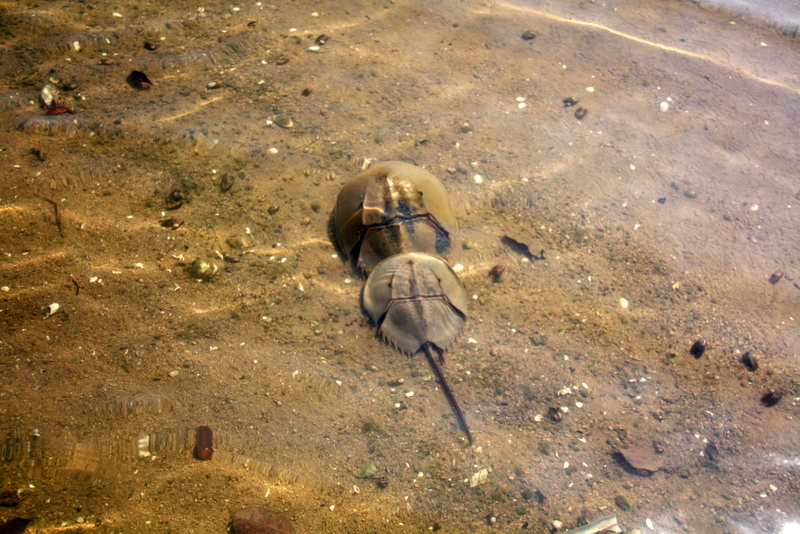
Mating pair of Tachypleus tridentatus caught at Ha Pak Nai, Deep Bay, Hong Kong on 8 October 2013.

Date: 8 October 2013
Location: Ha Pak Nai, Deep Bay, Hong Kong.
Comment: Mating pair of Tachypleus tridentatus caught by a local fisherman close to the shore at Ha Pak Nai, Deep Bay, Hong Kong.
Female: 33 cms across prosoma. 67 cms long.
Male: 25 cms across prosoma. Length not measured because of broken tail.  


The fisherman donated the pair to the horseshoe crab breed and release programme being run by City University and Ocean Park in Hong Kong. This is them in their new home.


Male and female together


Male on the right.


Female


In T. tridentatus, sexual dimorphism is shown by the presence of notches on the anterior margin of the male prosoma (head shield) and these are a secondary sexual characteristic – they are not apparent in the juveniles. These notches assist the male in attaching to the female during mating and are only present in male T. tridentatus – this is one of the distinguishing features of the male of this species.


The scars on the female opisthoma caused by prolonged attachment of the male. This female was carrying no eggs, suggesting this marked the end of a successful spawning season for the pair.


Sunday, 17 March 2013

White-bellied Sea Eagle over Ha Pak Nai, Hong Kong on 15 March 2013

Subject: White-bellied Sea Eagle (Haliaeetus leucogastor)

Time: 1700 hours (5 pm)

Date: 15 March 2013

Location: Ha Pak Nai, Deep Bay, Hong Kong.


Sunday, 16 December 2012

Pied Avocet at Ha Pak Nai, Hong Kong on 15 December 2012

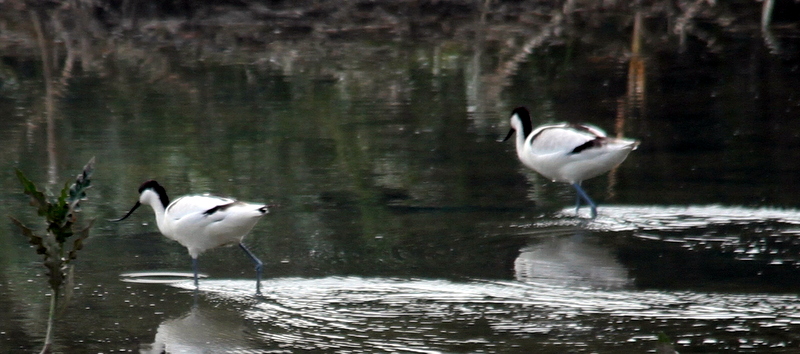
A pair of Pied Avocets (Recurvirostra avosetta) foraging at the mouth of the Pak Nai Watercourse (CH00 + 000) at Ha Pak Nai, Hong Kong on 15 December 2012. These birds are winter visitors to Hong Kong.


Monday, 9 July 2012

Tachypleus tridentatus. Ha Pak Nai, Hong Kong on 7 July 2012.

The following photographs show the foraging trails of juvenile Tachypleus tridentatus (Chinese horseshoe crab) on the seagrass beds/inter-tidal mudflat at Ha Pak Nai, Deep Bay, Hong Kong on 7 July 2012. The tide had just started to recede and all of these trails are made on the damp suface of the substrate:


Saturday, 16 June 2012

Carcinoscorpius rotundicauda. Ha Pak Nai, Hong Kong on 19 August 2009.

The following photographs show a spawning pair of Carcinoscorpius rotundicauda (Mangrove horseshoe crab), in the muddy bank of a stream at Ha Pak Nai, Deep Bay, Hong Kong on 19 August 2009.

The male is visible in the picture. The female is buried above him in the bank of the stream.


Carcinoscorpius rotundicauda. Ha Pak Nai, Hong Kong on 1 August 2009.

The following photographs show a mating pair of Carcinoscorpius rotundicauda (Mangrove horseshoe crab), crossing a beach along the course of a stream at Ha Pak Nai, Deep Bay, Hong Kong on 1 August 2009:


Friday, 15 June 2012

Tachypleus tridentatus. Ha Pak Nai, Hong Kong on 15 September 2009.

The photograph below shows a mating pair of Tachypleus tridentatus (Chinese horseshoe crab), caught in a fisherman’s net in the mouth of a stream at Ha Pak Nai, Deep Bay, Hong Kong on 15 September 2009.

The female on the left of the picture is 35 centimetres across the head shield. The smaller male is 25 cms across.

In the late 1960’s this fisherman once caught 200 Chinese horseshoe crabs in a single night and in the 1960's and 1970's such large catches of horseshoe crabs were not uncommon at Ha Pak Nai. In 2009 he caught just this one mating pair.

Undisturbed streams, particularly in their lower reaches are critical to horseshoe crab ecology in Hong Kong, because horseshoe crabs use stream courses to navigate across beaches and both T. tridentatus and C. rotundicauda  have been observed to spawn in the lower reaches of streams in Hong Kong.