Sunday, 10 June 2012

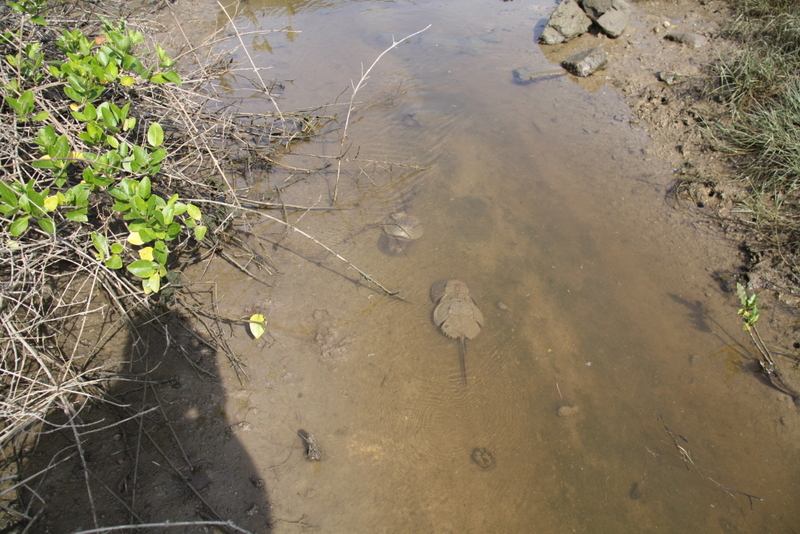
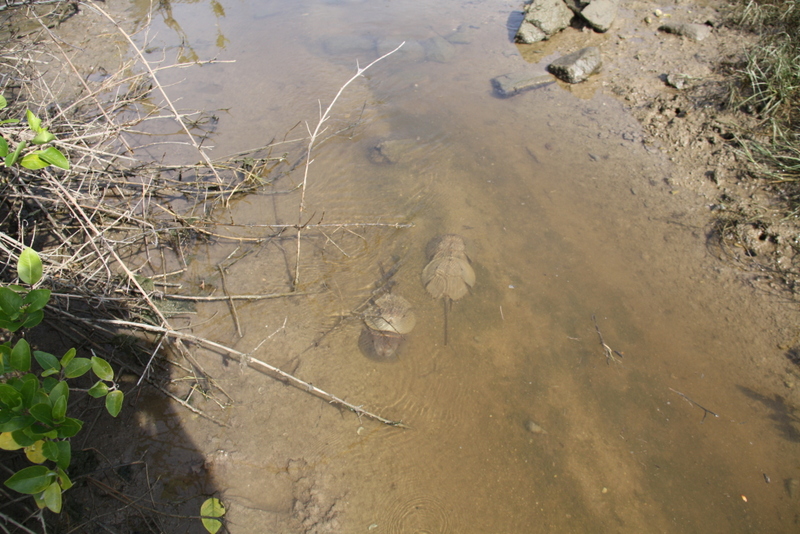
Carcinoscorpius rotundicauda. Tai Ho Wan, Hong Kong on 7 June 2012.

The following photographs show a mating pair of the horseshoe crab Carcinoscorpius rotundicauda swimming in a stream near the mouth of the Tai Ho Stream, Lantau, Hong Kong on 7 June 2012.

Undisturbed streams, particularly in their lower reaches are critical to horseshoe crab ecology in Hong Kong, because horseshoe crabs use stream courses to navigate across beaches and both T. tridentatus and C. rotundicauda  have been observed to spawn in the lower reaches of streams in Hong Kong.


Saturday, 9 June 2012

Carcinoscorpius rotundicauda. Tai Ho Wan, Hong Kong on 7 June 2012

The following photographs show a mating pair of the horseshoe crab Carcinoscorpius rotundicauda burrowing into a stream bed near the mouth of the Tai Ho Stream, Lantau, Hong Kong on 7 June 2012:


Carcinoscorpius rotundicauda. Tai Ho Wan, Hong Kong on 7 June 2012

Background

Tai Ho Stream was designated a Site of Special Scientific Interest (SSSI) in 1999 because it is one of the few remaining medium-sized natural streams stretching from uplands to the lowland estuary and because it supports the greatest diversity of fresh water and brackish-water fish in the territory. The SSSI includes mangroves and seagrass beds which are close to the mouth of the stream, and which provide shelter and food for a variety of intertidal and marine invertebrates.

The Tai Ho Stream feeds into Tai Ho Wan, which is on the north side of Lantau Island in Hong Kong.

Horseshoe crabs near the mouth of the Tai Ho Stream

The following photographs of the horseshoe crab Carcinoscorpius rotundicauda were taken near the mouth of the Tai Ho Stream, Lantau, Hong Kong on 7 June 2012: